What Is an Online Master of Arts in Communication, Digital Media, and AI?
Overview: UIC's Online MA in Communication, Digital Media and AI

Artificial intelligence is changing the way people communicate, consume information, and interact with digital media. Every day, algorithms influence the content that appears in social media feeds, recommendation systems determine what people watch or read next, and AI tools help organizations create information more efficiently. As these technologies become more integrated into everyday life, communication professionals are being asked to do more than create content or manage messaging. They need to understand how emerging technologies influence trust, shape behavior, and affect the ways people engage with information.
The Online Master of Arts in Communication, Digital Media, and AI at UIC was created to help meet that need. The program helps students develop communication expertise while exploring how AI, digital media, and emerging technologies are reshaping the field.
What Is an MA in Communication, Digital Media, and AI?
An MA in Communication, Digital Media, and AI is a graduate degree that examines how communication, digital media, and emerging technologies increasingly intersect in today’s world. While communication remains at the center of the curriculum, students also explore how AI, digital platforms, algorithms, and data systems shape how information is created, distributed, and consumed. The degree combines communication theory and strategy with the study of digital technologies and their growing influence across industries.
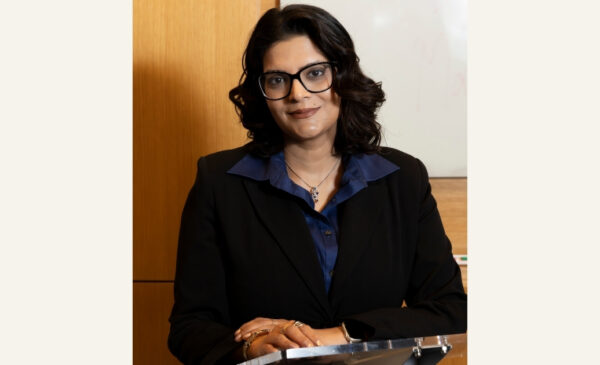
According to the Department of Communication faculty and program coordinator, Dr. Ishani Mukherjee, the program was developed in response to significant changes taking place across the communications landscape. “Professionals and graduates need more than just technical skills and the how-tos,” Mukherjee explains. “They should be able to think critically about data, ethics, equity, and the social and cultural impact of new technologies.” The result is a degree designed to help students understand not only how communication works, but also how technology increasingly shapes the environments in which communication takes place.
How Algorithms and Digital Media Shape Communication
Communication today looks very different from what it did even a decade ago. Mukherjee points to an important shift in how communication scholars think about online participation. “We’ve kind of made the shift from talking about digital citizens to this idea of algorithmic publics that some researchers have popularized,” she says. In the early days of the internet, people often viewed online spaces as places where individuals actively sought information and participated in conversations. Today, algorithms play a much larger role in shaping those experiences. The content people see, the recommendations they receive, and even the conversations they encounter are increasingly influenced by automated systems.
For communication professionals, that means understanding audiences requires understanding the technologies that help shape audience behavior. As Mukherjee explains, many professional decisions are driven by questions such as: What does the audience want? What values are people associating with a brand or organization? How do technologies influence trust, engagement, and decision-making? Those are communication questions as much as they are technology questions.
How Is an MA in Communication, Digital Media, and AI Different From a Traditional Communication Degree?
Traditional communication degrees often focus on subjects such as interpersonal communication, organizational communication, rhetoric, media studies, public speaking, and communication theory. Those foundations remain important, but the communication landscape has evolved significantly. Today, communication professionals operate in environments shaped by AI, algorithms, social media platforms, data systems, and digital technologies. Understanding communication increasingly requires understanding the systems that influence how information is engaged with online.
The Online MA in Communication, Digital Media, and AI builds on traditional communication concepts while examining how emerging technologies are changing the field. Students explore topics such as AI, social media analysis, digital privacy, influencer culture, data literacy, and digital platforms. Rather than treating communication and technology as separate subjects, the program examines how they increasingly operate together in professional practice.
What Will You Learn in the Program?
The Online MA in Communication, Digital Media, and AI helps students understand both the uses and consequences of communication technologies. Through the program, students develop skills in:
- Digital storytelling
- Strategic communication
- Social media analysis
- Digital journalism
- Public engagement
- Influencer marketing
- AI ethics
- Digital privacy
- Data literacies
- Understanding AI and emerging technologies
According to Mukherjee, these skills have direct applications across a wide range of communication professions. “Whether students are going into journalism, media, marketing, public relations, human resources, policy work, publishing, or digital media strategy, these skills have very material applications,” she says.
Mukherjee also notes that equity and access were important considerations in the program’s design. “When you’re creating a program like this, particularly when you want to have it designed for diverse learners and professional pathways, equity and access also have to be part of the design,” she explains. Students are encouraged to examine how factors such as access, culture, and local context influence the ways people engage with information and technology. “Communication and media technologies don’t impact all communities or publics in the same ways,” Mukherjee says. “Students really need to understand how issues like digital access, cultural considerations, and local and global differences shape communication expectations and technology adoption.” By exploring those differences, students gain a deeper understanding of how communication technologies are experienced across different communities and contexts.
Why Choose UIC’s Online MA in Communication, Digital Media, and AI?
UIC’s Online MA in Communication, Digital Media, and AI is Chicago’s only master’s in communication focused specifically on digital media and AI. The program is designed for working professionals and delivered in a fully asynchronous online format. Students can complete the degree in as few as nine months. According to Mukherjee, that flexibility was an important consideration during the program’s development. “The fully asynchronous format is another important advantage. As a graduate degree offered through one of the leading communication departments in the region, the program creates opportunities for working professionals and learners from a wide range of educational and professional backgrounds to pursue advanced study while balancing other commitments.”
Mukherjee also points to the faculty expertise behind the program as a key strength: “Faculty members are actively teaching and conducting research in areas such as AI ethics, digital literacy, digital journalism, social media, marketing, privacy studies, platform politics, and communication technologies. Students benefit from learning alongside scholars who are actively contributing to many of the conversations shaping the field today.” Together, these elements help create a program that combines flexibility with a curriculum grounded in current research and industry developments.
As communication continues to evolve alongside emerging technologies, professionals who understand both fields will be well-positioned to adapt to change and navigate new opportunities. If you’re ready to grow in your role as a communicator or transition into the field, an Online MA in Communication, Digital Media, and AI is a valuable next step.