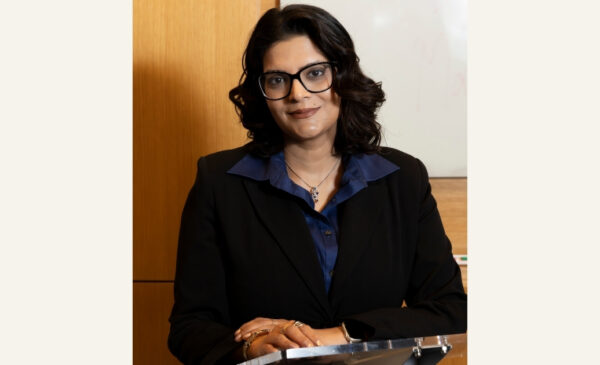
Meet Dr. Zizi Papacharissi: The Expert Behind UIC’s Online MA in Communication, Digital Media, and AI
Dr. Zizi Papacharissi

Long before artificial intelligence became part of everyday conversations, Dr. Zizi Papacharissi was studying the technologies that were transforming the way people communicate. She began researching the internet in 1995, at a time when fewer than 5% of people in the United States had internet access and less than 1% of the global population was online. Over the next three decades, she watched communication evolve through the rise of blogs, social media, and now AI, giving her a front-row seat to some of the biggest technological shifts of our time.
Today, Dr. Papacharissi brings that perspective to UIC as a professor and head of the Department of Communication. Drawing on decades of research, she worked with department faculty to conceptualize UIC’s Online MA in Communication, Digital Media, and AI, shaping a curriculum that prepares communication professionals to navigate a workplace where technology continues to evolve.
In the spotlight below, she shares what inspired the program, what makes it unique, and the philosophy that guides the curriculum.
One of the reasons we wanted to create this degree is that the professional landscape is changing, and job descriptions will continue to evolve. I don’t believe AI or chatbots are going to take over jobs entirely. Instead, I think we’re going to see something very similar to what happened in the late 1970s and 1980s when computers became a more prominent part of the workplace. There was some initial frustration, and many jobs gradually evolved into something more sophisticated. For example, we no longer have secretaries in the way we used to. Today, we have administrative assistants and program coordinators who handle more complex responsibilities while computers assist with routine tasks.
We thought it was the best time to put our research to good use and share our knowledge with professionals who could apply these skills to their everyday work and improve their professional standing. Digital media, communication technologies, and AI offer unique opportunities for expression, connection, and autonomy. But people have to know how to use them with a sense of purpose, with focus, and with a code of ethics.
There’s always some panic whenever a new technology emerges, but we hope to give people the skills they need to handle these situations and turn them into opportunities.
What Makes UIC’s Online MA in Communication, Digital Media, and AI Different?
One of the things that makes this program unique is that it’s fully online, making it accessible to professionals with different schedules, career backgrounds, priorities, and responsibilities. The second is its combined focus on communication, digital media, and AI. Many graduate programs emphasize one of those areas, but few bring all three together. Communication technology is the core focus of our program. We were among the first communication programs to organize our research, courses, and faculty expertise around how communication technologies influence public relations, branding, political communication, interpersonal communication, public speaking, intercultural communication, the economy, and many other areas.
Our faculty have been teaching these concepts and ideas for years in online and on-campus learning spaces. They’re recognized experts who have won awards and educated not only students but also professionals in the private and technology sectors and nonprofit organizations. They are trendsetters in social media, emerging technologies, and AI. We’ve anticipated changes before they happened and prepared our students for them. That’s been a defining characteristic of our department and one of the reasons many of us have collaborated with organizations that dominate the tech sector, including Meta, Google, Microsoft, Apple, as well as startups and nonprofit organizations.
What Students Learn in the Program
When we designed the curriculum, we wanted to teach principles that will always stay the same while also preparing people for technologies that will continue to evolve. Today we use Claude, but tomorrow that’s going to be a thing of the past. We want people to understand not only the technologies they’re using today, but also how to anticipate, make sense of, and adapt to whatever comes next.
One of my favorite courses is COMM 520: Data Metrics, Research, and Digital Literacies because we didn’t want to create a course that focused only on digital literacy. We wanted people to understand what digital data means, what’s behind the technology they’re using, and how to interpret misinformation. We wanted people to understand how to conduct these analyses themselves and how to produce those kinds of metrics. It’s about understanding how today’s technology works while building the skills to adapt to future technologies.
We also have a course called COMM 514: Social Media Influencers, Branding, and Marketing, where we take the core principles of branding and apply them to today’s creator economy. We talk about authenticity in an environment saturated with misinformation and templated content. Within a space where so many people are beginning to sound the same, it’s important to understand how to find your own voice.
We have COMM 515: AI and Digital Journalism, where we explore how AI can support better storytelling. Students learn how to use new tools to strengthen reporting, discover sources, create more engaging visual and interactive stories, and deepen their work while maintaining the human judgment that great journalism requires. Although some courses connect to specific industries, they’re really about something much broader. They offer a combination of communication, digital media, and AI skills that every contemporary professional needs to succeed.
The Philosophy Behind the Program
We wanted to create a degree that would empower people to take charge of their own professional futures. We offer the tools, frameworks, templates, and knowledge people need to advance, leap ahead, and reimagine their professional standing. Ultimately, that’s what this degree is about. AI will never replace you, but it also won’t teach you how to do your job better. We want people to have the confidence, knowledge, and vocabulary to stand up for themselves, present meaningful work, and make suggestions to their managers and supervisors. I want people to have agency in the workplace and a say in how their professional roles are being renegotiated.
That’s why we teach principles that help students understand both the technologies shaping today’s workplace and the communication skills that will continue to matter as those technologies evolve.
My wish for this degree is that people can use digital media, communication technologies, and AI not only to grow professionally, but also to enjoy their work more.
Explore how UIC’s Online MA in Communication, Digital Media, and AI can help you build the skills to adapt, lead change, and shape the future of your career.