Will AI Replace Communication Professionals?
Will AI Replace Communication Jobs?
AI tools can now draft a press release, summarize a report, or brainstorm a campaign in seconds. As these tools become part of everyday work, many communication professionals are thinking carefully about what that means for the future of their careers.
AI adoption is certainly accelerating. Gallup’s 2026 survey of more than 22,000 U.S. employees found that 52% now use AI in their role, more than doubling from 21% in 2023. Employers are also placing greater value on AI skills. PwC’s Global AI Jobs Barometer found that jobs requiring AI skills offer salaries that are, on average, 62% higher than comparable jobs that don’t require those skills. Together, those trends suggest that AI proficiency is becoming an increasingly valuable part of today’s workplace.
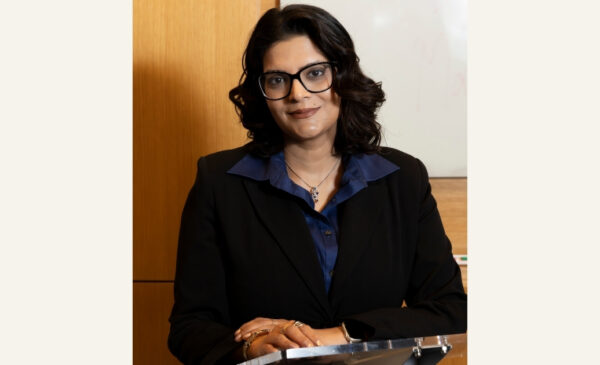
For communication professionals, learning to use AI is becoming an important skill. But effective communication has always been about more than producing content. It’s about building relationships and communicating ideas in ways that resonate with people, even as AI changes how that work gets done. According to Dr. Zizi Papacharissi, Head of UIC’s Department of Communication and one of the architects behind UIC’s Online MA in Communication, Digital Media, and AI program, AI is not replacing what makes great communicators valuable. While AI can generate content quickly, she believes originality, imagination, and human judgment will continue to distinguish exceptional communication professionals.
AI Can’t Replace Human Judgment
AI is remarkably good at generating responses quickly, but Dr. Papacharissi points out that those responses are designed to be the most likely, not necessarily the most insightful. “AI often blends out unique elements of communication and expression to offer what is the most likely, the most probable response,” she explains. “It doesn’t necessarily offer you the most accurate response. It offers the response most likely to please the audience you’re presenting to. That could be your professor, that could be your boss, that could be a potential client or a customer.”
That distinction is important because communicators still carry an essential responsibility to think critically about what AI produces. As she puts it, “It’s the individual’s responsibility to interpret that answer and decide what they’re going to do with it. Just because the AI bot gave you a reading on your doctor’s results doesn’t mean that you’re not going to go see the doctor.” AI can help people process information, but people still make the final decisions.
Why Originality Still Matters in Communication
One of the greatest risks of relying too heavily on AI is that communication starts to sound the same. Dr. Papacharissi believes professionals should use AI as a tool while keeping their own voice at the center of their work. “You don’t want a workplace where everybody’s writing cover letters and emails, and everybody sounds the same,” she says. “People are going to get tired of that real quick.” She also notes that experienced readers can often recognize AI-generated writing. “Professors know right off the bat that that was somehow generated by some kind of AI-supported engine.”
For Dr. Papacharissi, what ultimately sets great communicators apart is their ability to bring something original.
People want difference. It’s a very unique human trait. We look for difference, we look for innovation, we look for originality, we look for the presence of imagination, and then we reward it in our social relations.
She compares this instinct to the way people build relationships: “That’s how we choose our friends. We choose our friends because they’re different, unique, funny, or relatable.” The same principle carries into the workplace. “The marketplace rewards these things as well.” Whether someone is interviewing for a new position, presenting ideas to leadership, or building a professional reputation, originality remains one of the qualities that people remember.
The Skills That Set Great Communicators Apart
AI has the ability to automate certain tasks, but it cannot replicate the qualities of effective communicators, such as understanding people, building trust, and providing leadership. Dr. Papacharissi says employers will often prioritize candidates based on characteristics beyond technical skills. As she explains, employers often select “the one who was the most unique, the most autonomous, the one they felt could really hold their own, stand on their own feet, and handle any kind of situation they threw at them.”
Technical knowledge matters, but confidence, adaptability, and independent thinking continue to help professionals stand apart. Dr. Papacharissi believes the strongest professionals combine the experience they’ve gained throughout their careers with emerging AI skills rather than viewing the two as separate. “We want that combination of the experience, the gut feeling, and instinct of the person who’s been on the market for a while and then integrate it with these newer skills that are becoming very popular and starting to be part of the routine of how we work.” Instead of replacing what professionals already know, AI should help them build on it.
Preparing for the Future of Communication with AI
UIC’s Online MA in Communication, Digital Media, and AI program is about helping professionals strengthen the skills that technology can’t replace while learning to use AI thoughtfully and responsibly. As Dr. Papacharissi explains, the program is designed to help students “use AI and not to be used by it.” The fully online, asynchronous program is designed for working professionals, combining communication and AI with coursework in digital storytelling, research, emerging media, and the ethical use of technology. Rather than focusing only on today’s AI tools, students develop the knowledge and adaptability to navigate whatever comes next.
At the heart of Dr. Papacharissi’s philosophy is a simple reminder: “To be themselves. It’s the only thing that you can do really, really well.”
About the Expert

Dr. Zizi Papacharissi is Head of the Department of Communication at the University of Illinois Chicago and one of the faculty leaders behind UIC’s Online MA in Communication, Digital Media, and AI. For nearly 30 years, she has researched the social and political impact of emerging communication technologies, from the early internet and social media to today’s advances in artificial intelligence.
Her research and teaching focus on how communication technologies shape the way people connect and engage with society. Through her work, she helps professionals understand not only how emerging technologies work, but also how to use them thoughtfully, ethically, and with purpose.